



Shivani [Mathur] and I headed to Washington, DC the night before the show and settled into the Watergate Hotel (maybe an ominous sign?). We did some monument tours during the day, and then headed back to the hotel to prepare for the show that night. On the day of a show, I typically nap in the late afternoon (this is part of my prep), but that day I only slept about 30 minutes. I don’t usually write a show a few hours before, but I’d been thinking of a “Two Indias” riff for several months. The pandemic really brought the disparity in India into sharp relief: You had migrant workers and farmers dying and suffering, and then prominent families who were definitely not having that same experience. It was hard to ignore the privilege you had and what that meant relative to others.
Now don’t get me wrong, this is something that we are only too happy to ignore on a daily basis. Mumbai is a dichotomous city where people sleep on the street outside a nightclub and everyone seems to go about their lives like that isn’t the case. If nothing else, the pandemic was a time when people spoke up about how they felt about their country. Not just in India but globally. From farmers’ protests to the Citizenship (Amendment) Act, 2019 to Black Lives Matter to Boris Johnson. People were talking, and people stuck at home were listening more than they ever had before. So you just walked around more conscious of where you lived, and maybe you walked around abroad feeling homesick.
I’d been off tour and in India for two and a half years. Being on tour again was different. I missed my country, my dog, the hills, the forest. Groggy from my nap, with all of this on my mind, I wrote a set I decided to do after the show at the Kennedy Centre in about 20 minutes, and called it “The Two Indias.” It came out of me in a flow state, if you will.
When I read it out loud to Shivani, I asked her if I should actually do it. If you haven’t watched the show, the format was “I come from an India that does x, but I also come from an India that does y.” One aspect would be horrible, and the other would be redeeming. It was about the complexity of the country, but I also wanted to call out bullshit. In its purest intention, the show was designed to make us remember the light that we are capable of, that the positive flip side is still there, even though for over 12 months it had felt lost. I thought of it as a love letter to India, an India that I felt was fading in the pandemic. I tried to end it on a positive note. “I know that India still lives…” I wanted a big ovation for India. “Sure, you should do it,” Shivani said.
“What could go wrong?” We headed to the Kennedy Centre, ready to put on an amazing show. It wasn’t the first time I’d done a show that questioned things about India or called out privilege. Despite what some people later came to believe – that I used an opportunity handed to me at a great American institution to disparage my country – it’s still a regular theatre that charges rent, and while they are very picky about their programming, you will find more than the occasional dick joke onstage at the Kennedy Centre. It’s not the United Nations.
I hired a wedding photographer to film it, the only guy available on a Sunday in DC, for four hundred bucks, so I could put it online later. It wasn’t some vast conspiracy. It was just me, doing my work. Or so I thought. The problem was that the Kennedy Centre is not a forest. The crowd that night was amazing. Based on the reaction in the room, they loved the show. Then we did the Two Indias piece. The Indians in the audience had been nodding along, laughing through the show. I figured, “Cool!” Then, during the piece, which I read from a paper because it was brand-new material, they were silent. They chuckled a bit, and then their energy grew and grew and grew into something just massive. The last words of the set were “I know this is the Kennedy Centre, but tonight this is our fucking house, so make some noise for India.” There are no words to describe the ovation they gave. It was not for me but for something else.
It felt loose, like the forest. Shivani and I went out to dinner with some friends after the show, and a few days after we left DC, I posted the video online. When you post something potentially divisive on social media, it always goes well at the start. I woke up the next morning and saw that the post had about 800,000 views in 12 hours, which was a lot for my YouTube channel. I had talked about corruption, fake news, women’s rights, farmers’ rights, youth protests, patriotism, cricket, censorship, elections, religious equality, colonial hangovers, abuse of power, and more in a nearly seven-minute video. It was gonna track. Cool. Every comment seemed to be positive, and filled with love, or at the very least, a disappointed nostalgia for an India we missed and felt could be brought back.
And then it happened. One editor from one news channel reposted a small part of the video on Twitter, and my world imploded. The clip that this one editor posted had a fatal flaw, and it all comes down to grammar (believe me, when you get cancelled and lose all your jobs, you have tons of time to overanalyse things). Like I said, the format was “I come from an India that does x, but I also come from an India that does y.” Well, my mistake was in one single observation; I forgot to say “also.” Instead, I said, “I come from an India where we worship women during the day and gang-rape them at night.” That one word, “also,” would have changed the entire meaning. I wrote that line because several horrific gang rapes had happened in India.
Now look, anyone with any level of basic intelligence knows the intention behind the piece is to celebrate our darkness as much as our light, and understands where the line fits in the whole piece. “I come from an India where men in skyscrapers are silent and where children in the comments section have courage” does NOT mean that men in skyscrapers are also children in the comments. “I come from an India where we laugh behind closed doors, but I come from an India where we break down the walls of a comedy club.” This does not mean that the comedy audience is the same goons who vandalised two comedy venues that year.
Most people get this when they see the piece, that this piece is about two very different, separate groups existing in the same country, but when you take a line and post it out of context, I come from an India where the shit hits the fan. I guess the lesson is: Don’t use the Kennedy Centre as your open-mic night where you test out new material. Yes, the people who came after me would have found any reason to tear the monologue apart, but I do firmly believe that grammar is fucking important, and one fuckup can create an excuse to incite the mobs. Once that post happened, people lost their minds. In both good ways and bad. Here’s the thing I’ve never spoken about. That single video got over six million views on YouTube and about 9.5 million on Instagram. Pretty unremarkable, not newsworthy.
That’s NOT where it was shared the most. It got shared and sent around on WhatsApp as a download. That’s where everyone saw it. Almost triple the online viewership. Indian people, we’re smart. We knew this would be a political wildfire, but we still believed that what was said needed to be heard, so we found a way. Then my name started trending, and I was the number one trend on Twitter for a week. Then I was the subject of every prime-time bulletin. Politicians and news pundits on both sides were dissecting it on the news. I was being called a traitor, a terrorist. There were demands for my passport to be revoked, for my arrest the moment I landed back home.
Then foreign news outlets started to pick it up. CNN, the BBC, The Washington Post, The Guardian, Al Jazeera, some random Brazilian portal. It became terrifying, an unexpected wildfire. It was a strange feeling being on the news constantly. I wasn’t famous enough for that, but then all of a sudden I was, for all the wrong reasons. I had just come off a period of raising almost 50,000 dollars for Covid relief in India by doing Zoom shows for charity. I was feeling an intense amount of national pride, but that doesn’t mean I wasn’t going to call out the things I didn’t like about India. So I went from Emmy nominee to terrorist. Sorry again, Netflix.
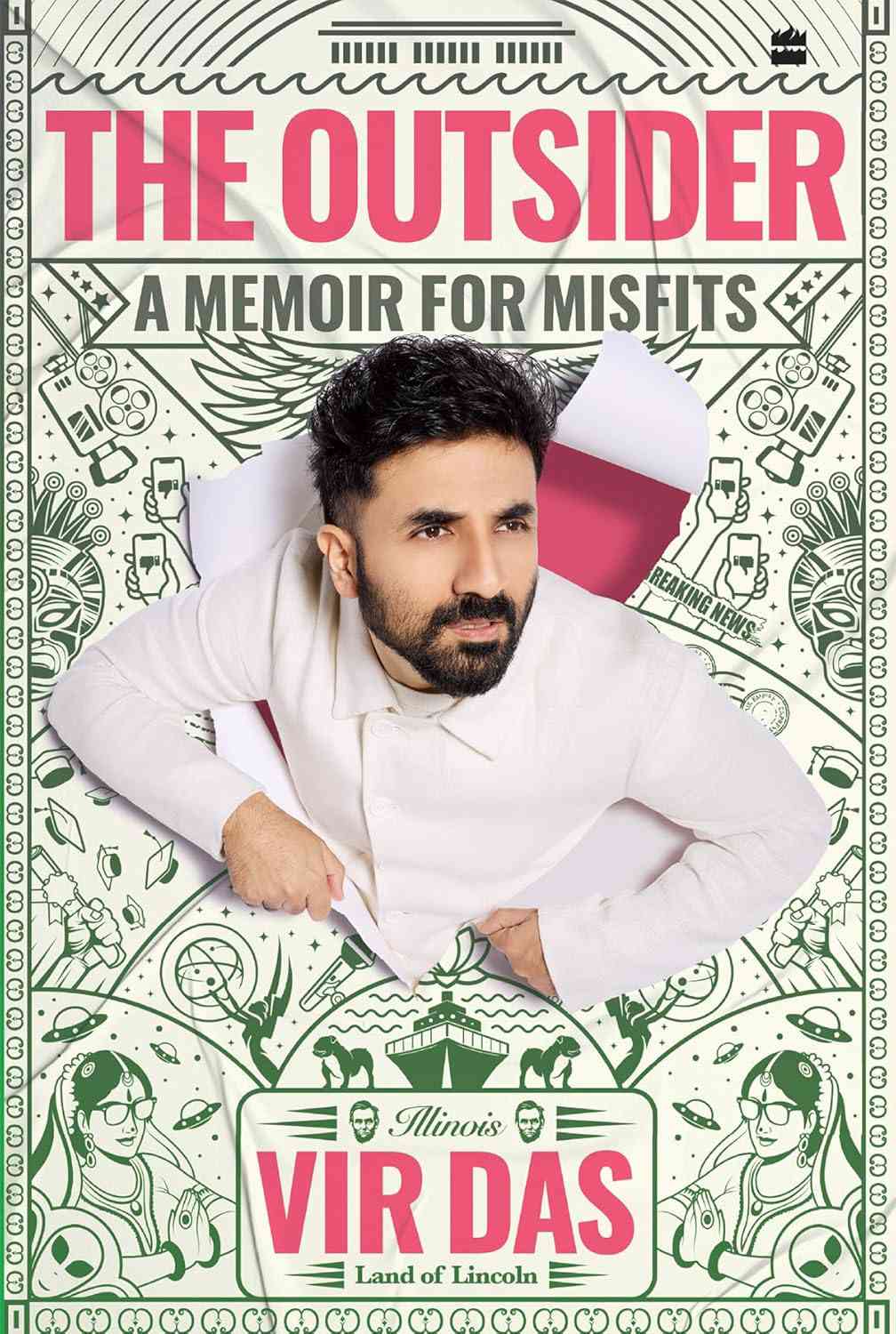
Excerpted with permission from The Outsider: A Memoir for Misfits, Vir Das, HarperCollins India.
